




What Happened
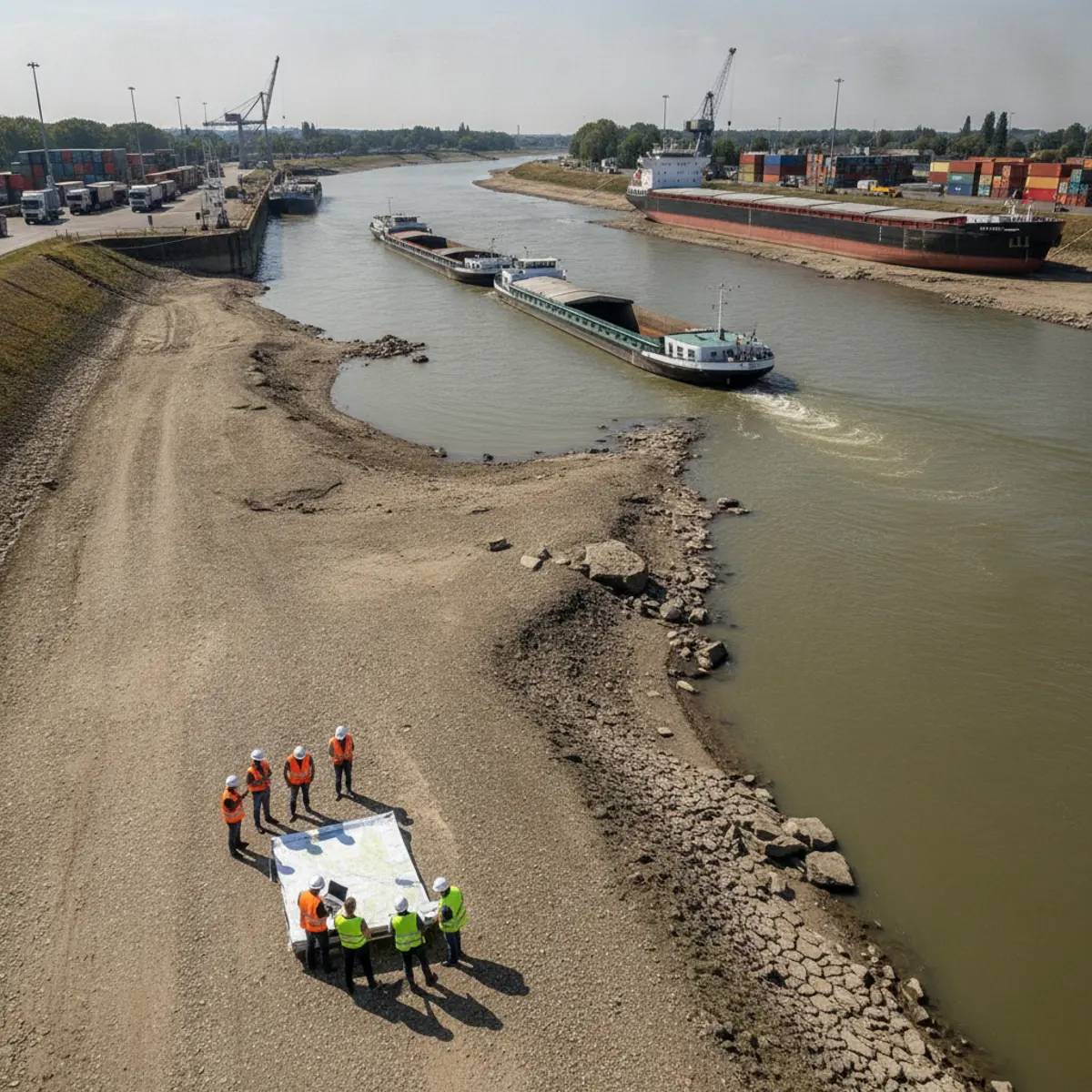
Water levels on the Rhine have fallen to their lowest point on record, reducing barge load factors and constraining inland shipping capacity, Hellenic Shipping News reported on 3 August 2026. The publication attributes the drop to extreme drought and describes the Rhine as one of Europe’s most important transport corridors. It frames the event as another in a sequence of disruptions on the continent’s main inland waterway, and argues that supply chains must adapt rather than treat low water as an exception.
Published: 3 August 2026 Source: Hellenic Shipping News
What Low Water Does to European Freight
Barges cannot load to capacity in shallow water, so operators sail lighter and run more journeys to move the same tonnage. That reduces effective capacity on the corridor serving Rotterdam, Antwerp, Duisburg, Ludwigshafen and Basel, and it pushes cargo onto rail and road. Bulk commodities feel it first, chemicals and fuels among them, but the knock-on reaches containers when boxes discharged at North Sea ports cannot move inland on schedule and start occupying terminal space.
For UK importers the exposure is indirect and real. Goods bought from German, Swiss, Dutch and Belgian suppliers still have to reach a North Sea port before they cross to Immingham, Purfleet or Dover, and if inland capacity is tight, that first leg lengthens. Competition for trailers and rail slots on those corridors raises inland haulage costs at the same time. Hellenic Shipping News treats this as a recurring pattern rather than a single bad summer, which is the part that matters for planning.
Practical responses sit in scheduling and contracts. Extend lead times on European purchases while low water persists, and ask suppliers to confirm the inland mode rather than assuming barge. Check Incoterms 2020 terms to see who carries the cost when inland transport switches mode mid-journey. Where volumes justify it, book road or rail earlier than usual, and consider consolidating shipments so fewer, fuller loads compete for scarce capacity.
Key Takeaway
Low water on the Rhine is a capacity problem, not a weather story. Treat it as a standing input to supply chain management rather than a seasonal surprise, extend European lead times now, and confirm with suppliers which inland mode is actually carrying the goods.
Market Impact for UK Shippers
The cost effect arrives through inland haulage and lead time rather than through ocean rates. When barge capacity contracts, road and rail demand rises on the same corridors, and hauliers price accordingly. UK importers running just-in-time replenishment from continental suppliers carry the sharpest exposure, because a 3 or 4 day slip on the inland leg consumes the whole buffer before the goods reach a ferry or shortsea sailing.
The longer view is about design. Supply chain management that assumes one inland mode will always be available leaves no room to react when that mode loses capacity. Shippers with pre-agreed road and rail alternatives, and with visibility of which leg is barge-dependent, absorb these events. Those without discover the problem when goods fail to arrive. Reviewing European sourcing routes for single-mode dependency is the useful response to this record.