




What Happened
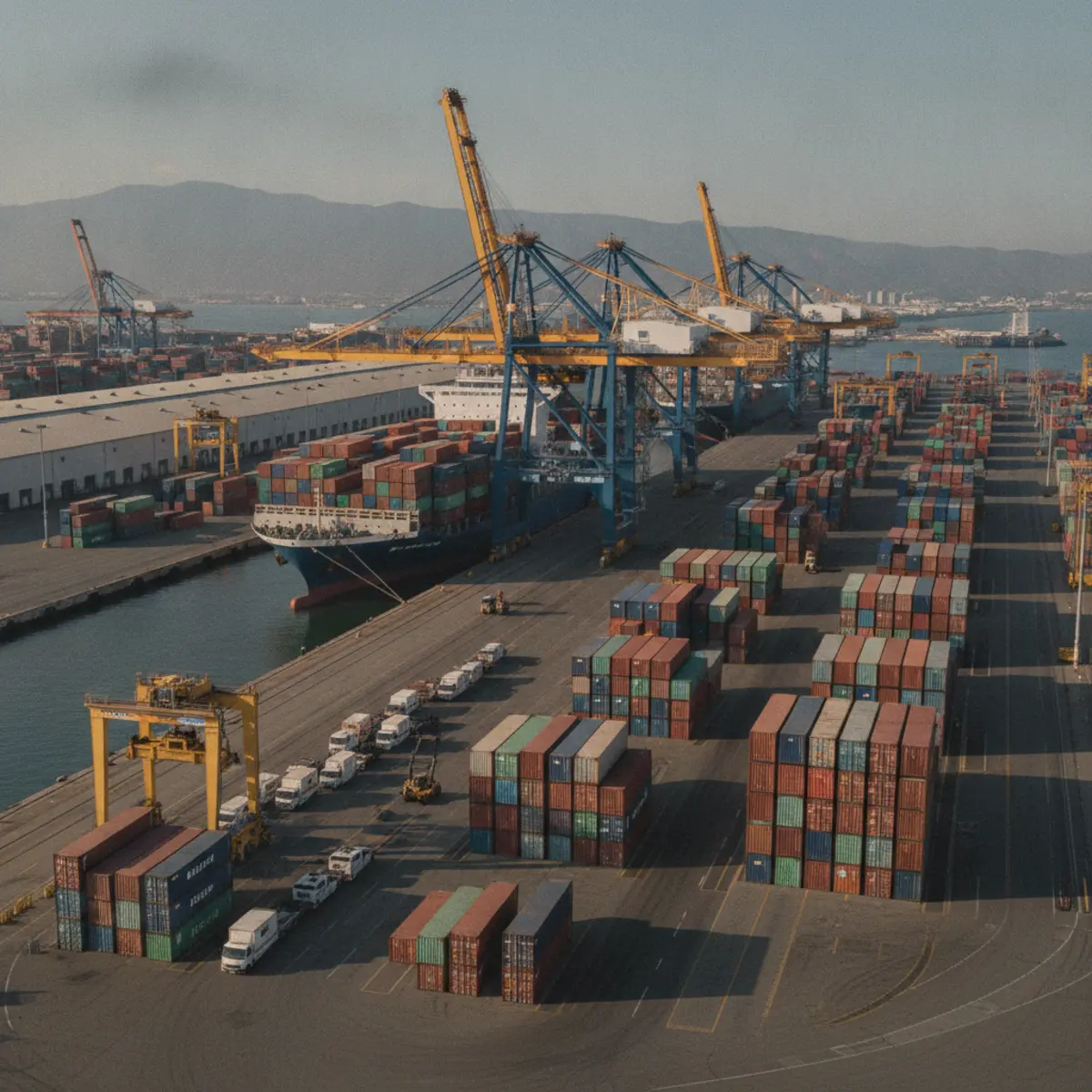
The Port of Los Angeles handled nearly 1 million containers in July, making it the port’s second busiest July, gCaptain reported on 18 August 2026. The month extends a run of historically strong cargo volumes at the port, according to the report, and comes as an early peak shipping season begins to wind down. The report does not split the total into loaded imports, loaded exports and empty repositioning, and gives no year on year comparison figure. Los Angeles is the largest of the US west coast container ports by throughput.
Published: Tue, 18 Aug 2026 Source: gCaptain
What a Softening US Peak Season Means for UK Shippers
Los Angeles is not a UK lane, but it is one of the clearest single reads on transpacific demand, and carriers deploy tonnage and equipment where demand is strongest. A busy transpacific pulls ships and boxes towards the Pacific; a slackening one releases them. UK importers on Asia to North Europe services feel that second hand, through space availability at Asian load ports and the direction of spot rates, rather than through anything that appears on a bill of lading or changes a transit time this month.
The detail worth holding on to is the timing. gCaptain reports that the peak season started early and is now beginning to wind down, which means the usual August to October build up may already have happened. Volumes that arrive early tend to leave Asian ports empty of urgency later in the quarter. For UK importers planning Q4 stock, that pattern historically loosens space and softens rates into the autumn, though gCaptain reports the volume figure only and makes no rate forecast.
The practical response is to separate what is confirmed from what is expected. Confirmed: July throughput at Los Angeles was close to 1 million containers and the peak arrived early. Not confirmed: what carriers do next. Watch for blank sailings announced on Asia to North Europe strings, because a wound-down peak usually prompts capacity management, and blanked sailings are what turn a soft market into a missed delivery date. Booking 3 to 4 weeks ahead of a firm sailing remains the practical hedge.
Key takeaway
Strong Los Angeles volumes with an early peak season point to demand that has been pulled forward rather than demand that has grown through the autumn. UK importers should read it as a signal to watch capacity management on Asia to Europe services, and to book against named sailings rather than assuming week-to-week availability.
Market Impact for UK Importers and Exporters
For UK importers, the near-term effect is on equipment and space rather than on cost at the quay. When transpacific volumes ease, container equipment that has been cycling to the US west coast becomes available for other trades, which usually improves box availability at Asian origins. That helps FCL shippers first and LCL shippers shortly after, because groupage consolidations depend on enough cargo and enough equipment moving on the same sailing to fill a box within the advertised closing date.
For exporters, the read across is different. Strong throughput at US ports reflects import demand into the United States, which says little about UK export prospects on the same lane. What it does affect is the westbound leg: full ships into the US west coast mean the empties and the slots on the return leg have to be managed, and that is where carriers make schedule decisions. UK exporters shipping to North America should confirm rolling policy at booking rather than after a container is at the port.
Source: https://gcaptain.com/port-of-los-angeles-nears-1-million-teus-in-second-busiest-july/