




What Happened
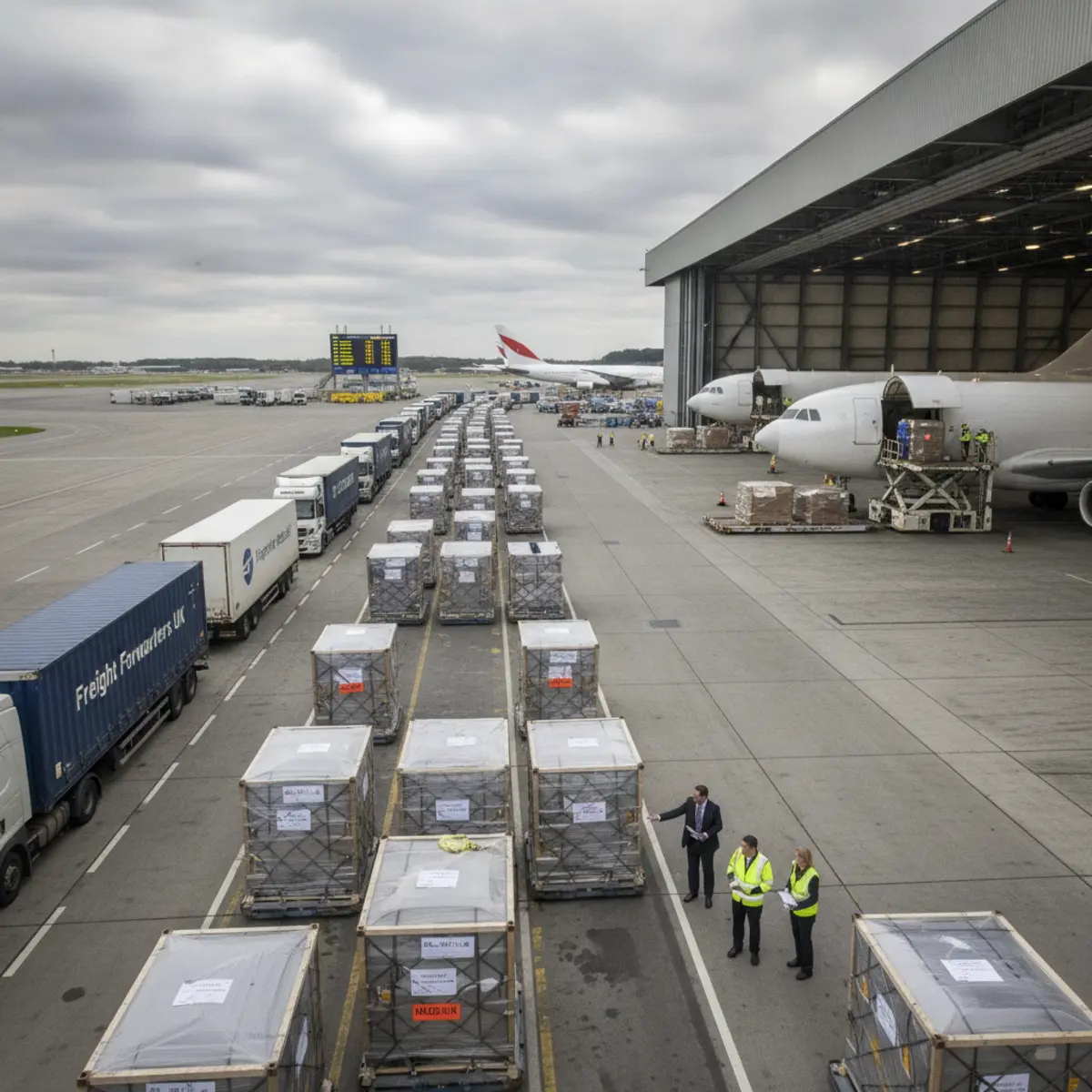
BIFA has warned that air traffic control disruption at Heathrow Airport has affected belly-hold cargo operations and that delays are likely to continue for several days, Air Cargo Week reported on 14 September 2026. The association said urgent and time-sensitive shipments are the most exposed. Forwarders are assessing alternative routings and prioritising affected consignments, according to the same report. Air Cargo Week did not publish the cause of the air traffic control problem, the number of flights affected, or a date by which normal operations are expected to resume.
Why Belly-Hold Capacity Is the Weak Point
Belly-hold capacity is where this bites. Much of the UK’s air cargo travels in the holds of passenger aircraft rather than on dedicated freighters, so a passenger schedule problem at Heathrow Airport removes freight capacity even though no cargo aircraft is grounded. When rotations are cancelled or reshuffled, cargo already accepted into the shed does not simply roll onto the next service. It queues behind consignments already booked for that flight, which is why an export can sit for days before a confirmed uplift.
Heathrow carries the largest share of UK air freight by value, and there is no close domestic substitute. Manchester, East Midlands and Stansted handle freighter and express traffic, but they do not replicate the long haul passenger network that belly-hold capacity depends on. Trucking a consignment to a European hub such as Amsterdam, Frankfurt or Paris is the standard workaround and it works, but it adds a road leg of at least a day, a change of carrier, and an export customs entry that the original booking did not require.
Shippers with exposure should act on 3 points now. Confirm with the forwarder whether each booking sits on a passenger belly-hold service or a freighter, because the two recover at different speeds. Re-check the customs position on anything that changes gateway, since departing from a European airport alters the office of exit and the export declaration and MRN must match the actual departure point. And where a delivery is genuinely time-critical, price the road option alongside air freight services rather than after the flight has already been missed.
Key Takeaway
Air traffic control disruption at Heathrow Airport is a capacity event, not only a delay event. Because most UK air cargo moves in passenger aircraft holds, a schedule failure removes freight space outright, and the resulting backlog tends to clear in booking order rather than by how urgent each consignment is.
Market Impact
Backlogs at a hub clear more slowly than they form. Once a day of departures is lost, the following days are already sold, so recovery depends on spare capacity that a busy September schedule rarely carries. Perishables, pharmaceuticals and aerospace spares feel it first, because each has either a shelf life or an aircraft on ground clock attached. BIFA’s warning that effects will run for several days is consistent with how hub backlogs have behaved in previous disruption at the airport.
For UK exporters, the practical consequence is documentation as much as routing. A consignment that changes gateway needs its export declaration amended to match, and one that misses a letter of credit shipping date needs the buyer’s written agreement before it flies. Importers should check whether delayed arrivals affect a customs warehousing arrangement or shift the month in which import VAT is accounted for under postponed VAT accounting, since the entry date, not the order date, drives the return.
Reported by the Plexus Freight team, from Air Cargo Week.
Source: https://aircargoweek.com/bifa-warns-of-continued-airfreight-disruption-at-heathrow/