




What Happened
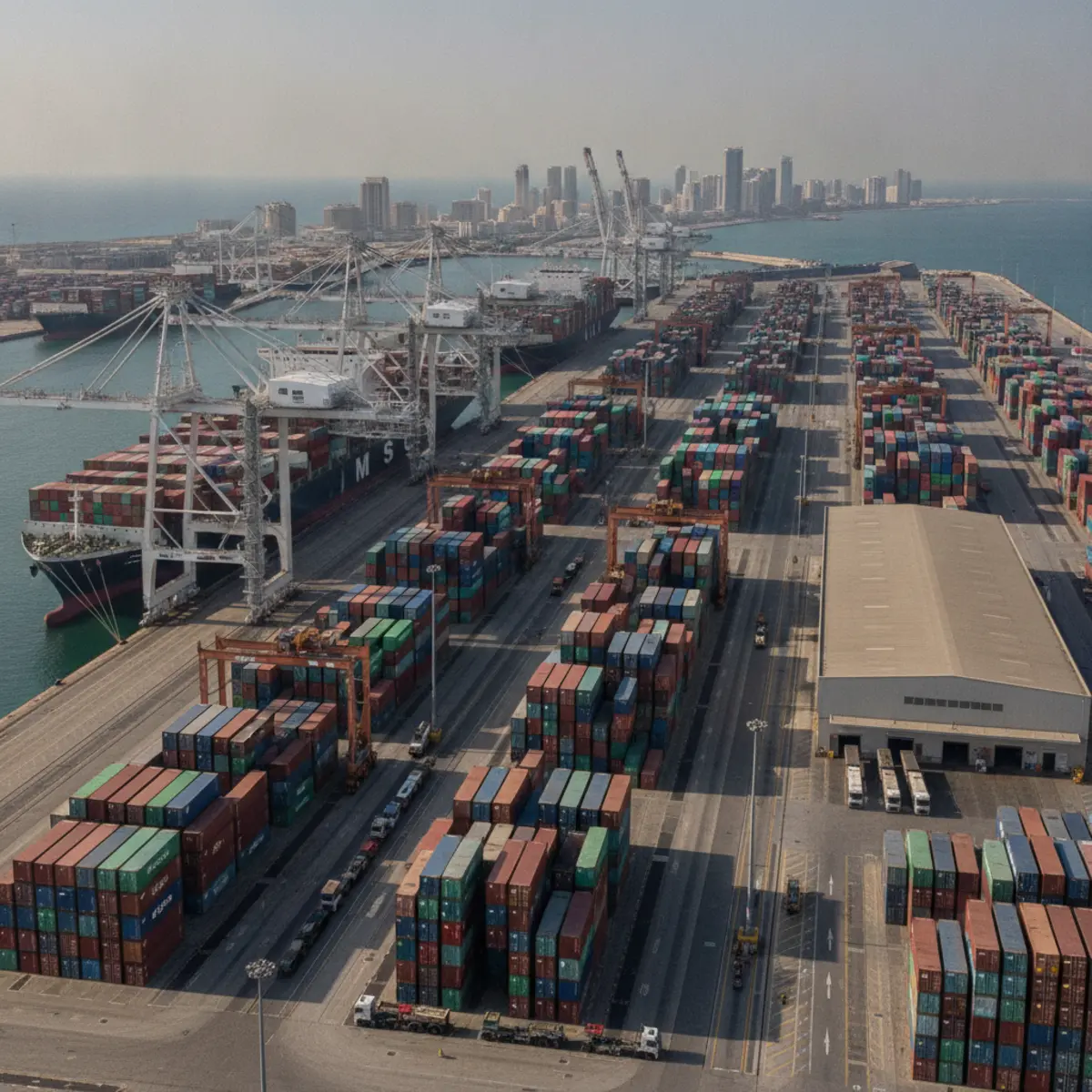
The South Container Terminal at Jeddah Islamic Port handled more than 221,200 TEU in July 2026, its highest monthly throughput since DP World began operating the terminal in 1999, The Maritime Standard reports. The same month brought the terminal’s highest recorded containerised export volume, at 79,720 TEU. Jeddah sits on Saudi Arabia’s Red Sea coast, between Bab el Mandeb to the south and the Suez Canal to the north, which places it among the main transhipment points linking Asia, Europe and East Africa. The report was published on 15 September 2026.
What Record Jeddah Volumes Mean for UK Cargo
If your cargo tranships through Jeddah, a record month cuts both ways. A shipping container on a transhipment routing is exposed to two schedules rather than one, and a busy terminal usually means more connecting services and shorter waits for an onward vessel. It can also mean denser yards and tighter connection windows, so a missed transfer costs a full week rather than a day. Ask which terminal handles your transhipment and how many sailings a week serve the onward leg to Felixstowe, Southampton or London Gateway.
The export figure is the more telling half. Exports of 79,720 TEU in a single month point to Saudi non-oil cargo moving in volume, which matches the stated direction of the kingdom’s industrial policy. For UK buyers that means more competition for westbound space, and for UK exporters it usually means more regular container shipping services calling at a port working at record levels. Gulf hub competition is live, with Jebel Ali, Salalah and King Abdullah Port all courting the same transhipment cargo.
For anyone shipping to Saudi Arabia, the harder work sits away from the quay. Goods need the correct commodity code, a conformity certificate accepted by the Saudi authorities, and a certificate of origin where the buyer’s bank or the import entry requires one. On the UK side the export declaration still goes through CDS, and the EORI number must match the exporter named on the commercial invoice. Get the document set right and record terminal volumes work in your favour. Get it wrong and a fast terminal simply delivers your delay sooner.
What to Take From This
DP World’s Jeddah terminal has confirmed a record July at 221,200 TEU, with containerised exports at 79,720 TEU. For UK shippers this is a routing signal rather than a rate signal: more shipping container volume moving through a Red Sea hub, busier yards to plan around, and a Saudi export market worth quoting.
Market Impact
Transhipment hubs set the real transit time on many Asia to UK and Middle East to UK routings. A record month at one terminal does not change a published schedule, but it shows where volume is concentrating, and concentration is what turns a 2 day connection into a 7 day one when a berth slips. Importers running replenishment to tight stock levels should price that risk into buffer stock rather than into the freight rate, because the cost lands in the warehouse, not on the invoice.
There is a second reading for UK exporters. Saudi Arabia is among the larger UK export markets in the Middle East, and a terminal posting its best export month since 1999 is generally a terminal with equipment, labour and berth capacity in place. That supports regular FCL and groupage departures, and steadier shipping container availability for exporters moving 20ft loads of machinery, building products or foodstuffs. Watch whether DP World reports comparable months through the autumn before treating July as a trend.
Reported by the Plexus Freight team, from The Maritime Standard.
Source: https://www.themaritimestandard.com/record-monthly-throughput-at-jeddah-south-container-terminal/