




What Happened
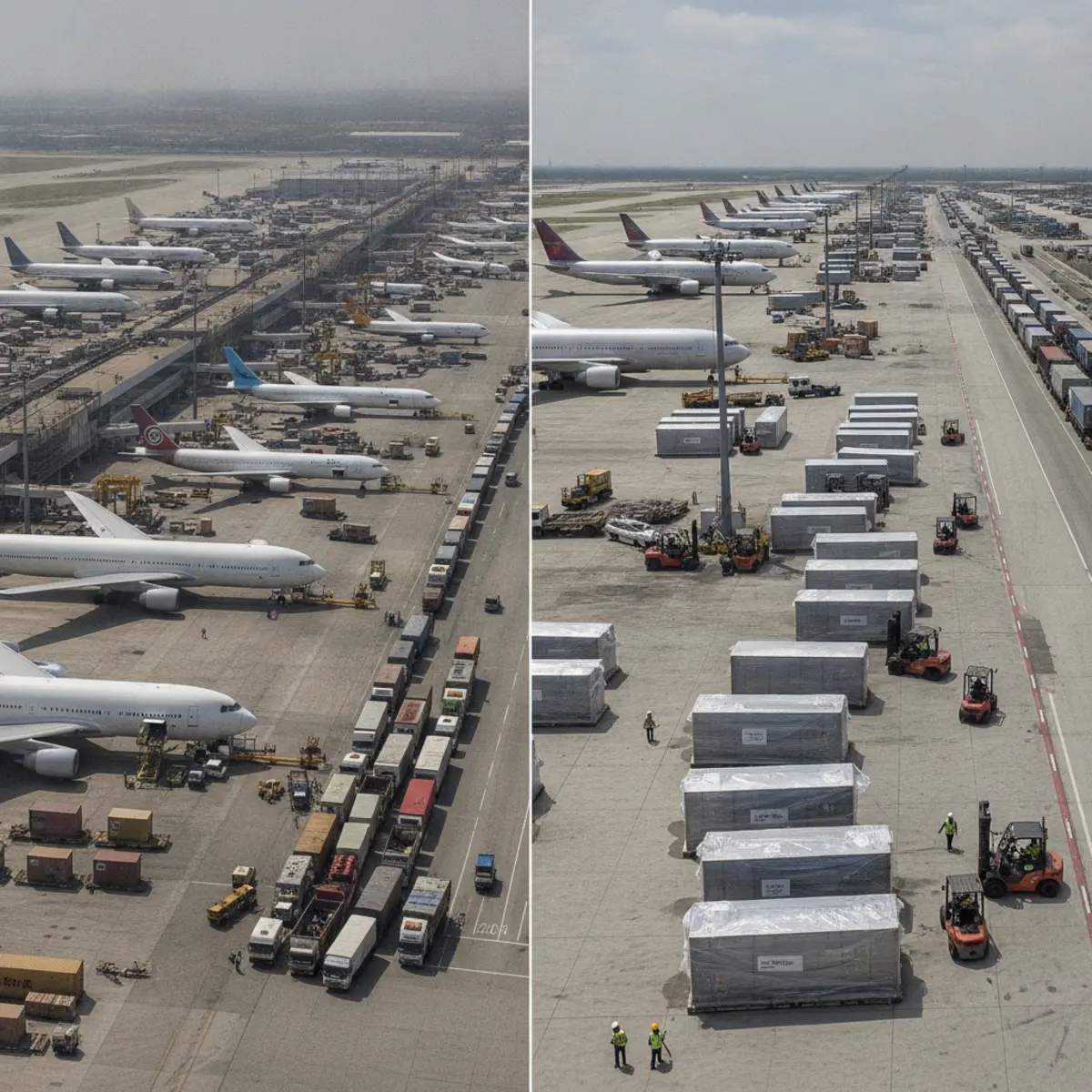
Cargo airlines flying into Mumbai are facing congestion at both of the city’s airports, The Loadstar reported on 29 September. Capacity at the older site in Mumbai City is restricted while airside infrastructure is upgraded, and dedicated freighter slots there are suspended until June next year. The new hub, Navi Mumbai International (NMIA), is running into what The Loadstar calls unexpected teething troubles as traffic transfers in. Both sites are managed by Adani Group, which has been pushing airlines and other stakeholders to shift cargo operations across.
What Mumbai Congestion Means for UK Trade with India
UK importers moving goods from western India should build extra handling time into bookings now. Mumbai is the main gateway for pharmaceuticals, engineering components, textiles and jewellery moving to Europe, and when freighter slots move to a hub that is still bedding in, the delay usually shows up on the ground rather than in the air: longer waits for acceptance, later tender cut-offs and export documentation held at the shed. Consolidated groupage consignments feel it first, because a single late piece holds the whole build-up.
The wider pattern here is a capacity migration on a fixed clock. With freighter slots at the old site suspended until June next year, carriers cannot wait out the teething problems at the new airport, and each airline faces the same choice: move, thin its schedule, or route Indian cargo through another gateway such as Delhi, Bengaluru or Chennai. Splitting handling across 2 sites in a single city also splits trucking, ground handling contracts and customs clearance capacity, which is where cost usually appears.
Before the next booking, make 3 checks. Ask which Mumbai site your consignment will be handled at, because the answer changes the trucking distance from shipper to shed and the realistic cut-off. Ask whether the airline has held its schedule during the transfer, since a weekly rather than twice-weekly service turns a missed acceptance into a 7 day delay. Where goods can wait, comparing air against the sea and road options within our freight services gives a fuller picture, because Nhava Sheva to UK ports runs in weeks rather than days.
Key Takeaway for India Lanes
Freighter slots at Mumbai are suspended until June next year, so the congestion The Loadstar describes is not a passing queue. UK importers should plan Indian air freight around the new hub, confirm which site handles their goods, and treat published transit times as optimistic until the transfer settles.
Market Impact on India to UK Lanes
Expect pressure on rates out of western India while the transfer runs. When slots tighten at one airport and handling is unproven at the other, carriers protect yield and space goes to committed volume first, which leaves ad hoc and spot shipments waiting for the next available flight. Importers with contracted allocations are better placed than those buying on the day. The effect is most visible on high-value, low-volume traffic where a missed flight is expensive, such as pharmaceuticals, aerospace components and electronics.
On the UK side, the arrival profile matters as much as the departure. Goods landing later than planned still need a customs entry on CDS, and an import that misses its slot at the handling agent can sit in the transit shed overnight before release, adding a day before the road leg to the Midlands or the South West begins. Buyers running just-in-time production lines should tell suppliers in Mumbai to build documentation earlier, because an air waybill and commercial invoice ready in advance is the one part of the chain congestion cannot delay.
Reported by the Plexus Freight team, from The Loadstar.
Source: https://theloadstar.com/mumbai-airports-hit-by-congestion-as-freighter-services-switch-hubs/