



What Happened
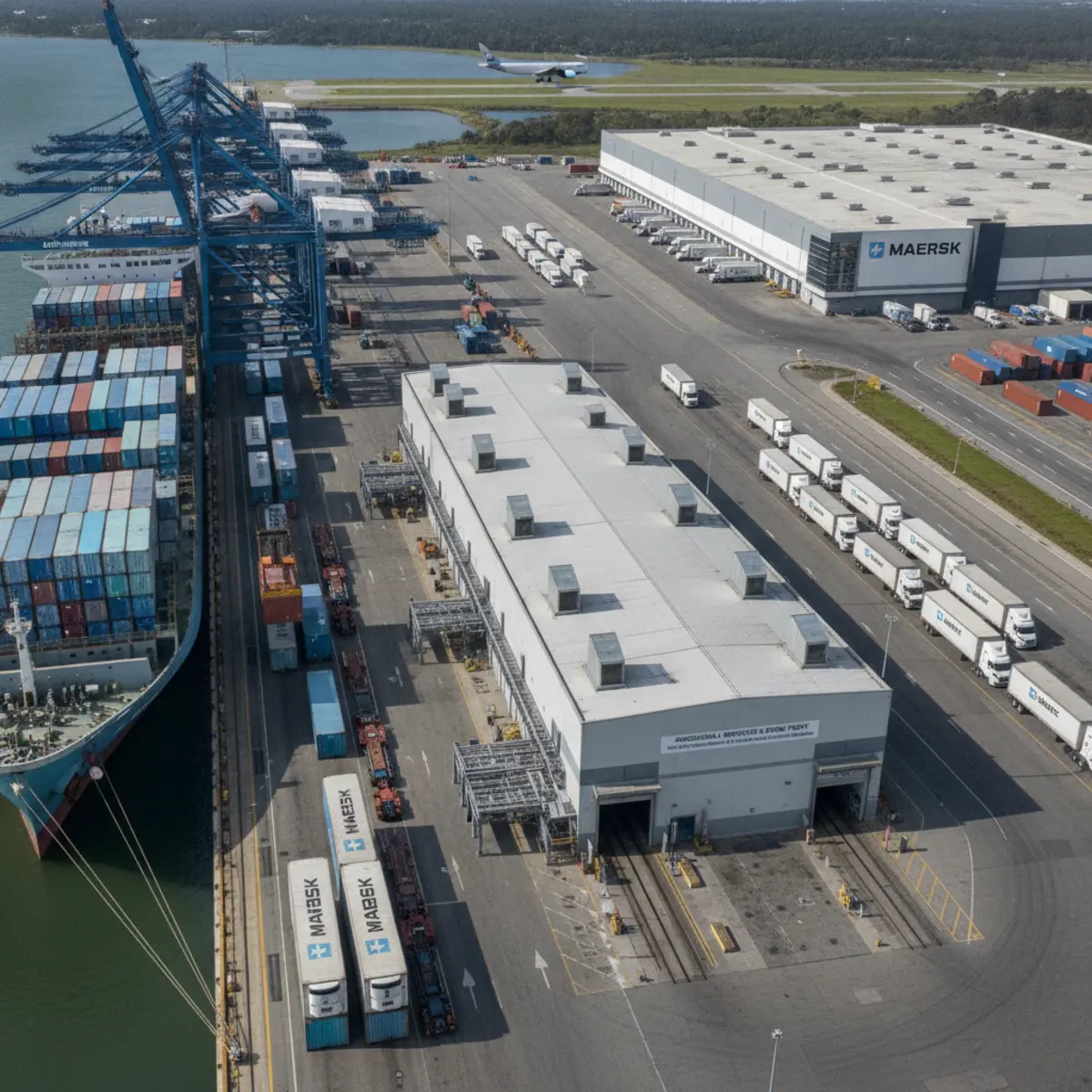
Maersk has launched an integrated cold chain service linking origin operations in Chile with ocean transport, US port handling, fumigation, inland movement and cold storage, according to Logistics Business. The carrier developed it alongside fresh produce supplier Oppy and the Port of Wilmington, and it targets regulated produce moving into the US Mid-Atlantic and Southeast. Logistics Business describes the result as a scalable model rather than a one-off routing, with steps that normally sit across several providers held by a single operator.
Published: 30 July 2026 Source: Logistics Business
Why Carriers Are Buying Into the Cold Chain
The standard logistics definition of ocean freight stops at the port gate. What Maersk has assembled, per Logistics Business, extends past it into fumigation, inland movement and cold storage, all steps where temperature-sensitive cargo usually changes hands. For any importer of perishables, the handovers are where the risk sits. A reefer container that holds temperature across a 3 week ocean leg can still lose the load during a slow discharge, a delayed inland collection or a full cold store at destination.
UK importers do not use this lane, but the structure matters. Carriers extending control inland changes who answers the phone when a reefer alarms, and it changes how claims are settled. It also narrows the choice of independent inland providers on the routes where carriers do this. For time-critical perishables and high-value pharmaceutical loads, the alternative remains temperature-controlled air freight, which trades a higher rate per kilo for a far shorter exposure window.
The action point for UK shippers is contractual, not operational. Check where your Incoterms 2020 rules place the transfer of risk against where the cargo physically changes hands, because those two points are often several days apart on a reefer move. Confirm who books the cold store at destination and what happens if it is full. Confirm who holds responsibility for phytosanitary and plant health documentation, since a produce consignment that clears the ocean leg cleanly can still be held at the border on paperwork alone.
Key Takeaway
Integration is the direction of travel in perishables, and it widens the working logistics definition of a shipment from port to port into origin to cold store. UK importers should read their contracts against that shift and confirm who owns each handover before the next reefer books.
Market Impact for UK Perishable Importers
Perishable freight is priced on reliability rather than on rate alone. A load that arrives 2 days late with a temperature excursion is a total loss, so importers pay for control of the chain. Carrier-led models like this one compress the number of parties involved, which usually improves accountability and reduces the finger-pointing that follows a claim. The trade-off is less flexibility to switch inland providers when service slips.
Expect the pattern to reach European and UK lanes if it performs. Deep-sea carriers have been building inland capability for several years, and cold chain is the segment where the margin justifies it. UK importers bringing produce, seafood or pharmaceuticals through Avonmouth, Tilbury or Portsmouth should benchmark integrated offers against a conventional FCL booking with independent inland handling, and compare total landed cost including cold storage rather than ocean rate in isolation.