

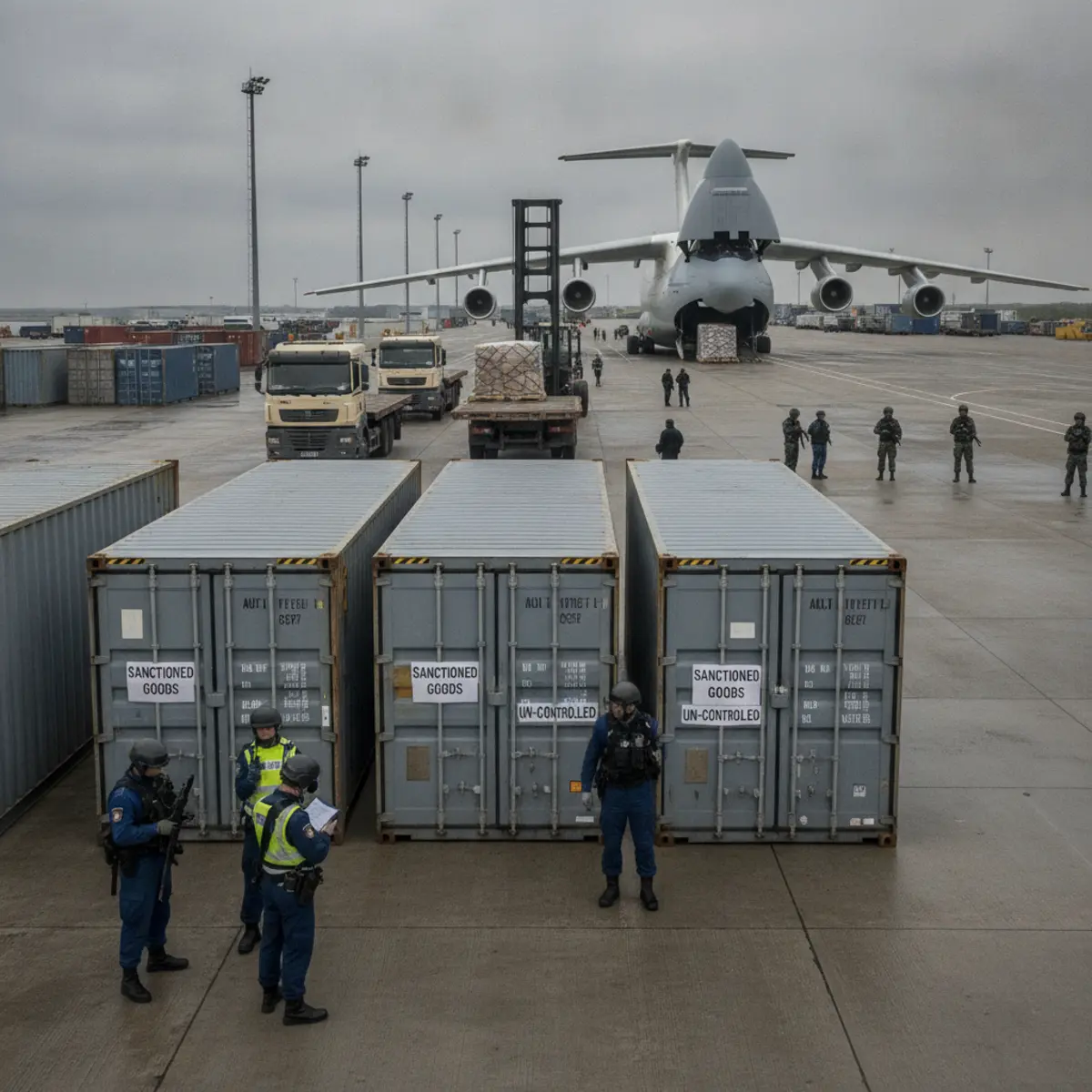



What Happened
GOV.UK updated its import controls guidance on 18 September 2026, setting out how to bring in goods that sit under national or UN-level controls. The guidance, published under GOV.UK Business and Trade, names three categories the government treats as restricted: weapons, goods subject to sanctions, and goods that could be used for torture. It describes the permission route an importer must complete before those goods reach the UK border, rather than the ordinary customs process that applies to unrestricted commercial cargo. The published summary sets out scope, not a new deadline or a new commodity list.
What Controlled Goods Mean for UK Importers
Controlled goods need their permission in place before the cargo arrives, not after. Where a licence applies, its reference has to be declared against the relevant document code on the Customs Declaration Service, and an entry filed without it will not clear. Goods then sit under customs control at the port while storage, quay rent and container demurrage accrue against the consignee. The check belongs at the purchase order stage rather than at the point of UK import and customs clearance, because a licence application takes time that a vessel already at anchor does not give you.
The category is wider than the headline wording suggests. Since the UK expanded its sanctions regime against Russia in 2022, control has attached to a long list of ordinary industrial items, including machine tools, electronic components, and chemicals with civil uses, alongside the military goods most importers would expect. Financial sanctions on the counterparty are a separate regime again, administered independently of goods controls, so a compliant commodity code does not settle whether you can pay the supplier. End use and end user carry as much weight in these decisions as the tariff classification does.
The practical next step is a two-sided review. Screen the supplier, the ultimate consignee and the end use against the current consolidated lists, then confirm whether the commodity code you intend to declare falls within a control list on the arrival date, since those lists change during a shipment’s transit. Give your customs agent the licence number and any supporting documents before the vessel or aircraft arrives, and retain the evidence for the statutory record-keeping period. Goods routed through a third country before reaching the UK need the same scrutiny at each leg.
Key Takeaway
Import controls are a pre-shipment compliance question, not a border formality. If the goods, the end use or the counterparty touch a control or sanctions list, the licence has to exist before loading, because customs will hold the consignment at the port and the cost of that hold falls on the importer.
Market Impact for UK Trade
For importers, the cost of getting this wrong is measured in days at the quay rather than in penalties alone. A held container at Felixstowe, Southampton, London Gateway or Avonmouth continues to accrue demurrage and storage while the licence position is resolved, and a groupage consignment holds up every other consignee’s cargo in the same trailer or container. Buyers sourcing industrial components from markets with mixed civil and military use should expect longer pre-shipment checks and should build that into supplier lead times.
For the wider market, control lists have become a live variable in sourcing decisions rather than a fixed background rule. Procurement teams that once classified a product once and left it are now re-checking on each order cycle, particularly for electronics, precision engineering and chemical inputs. The compliance burden falls unevenly: larger importers absorb it through in-house trade compliance staff, while smaller businesses rely on their customs agent to flag the risk, which makes the quality of the commodity code data they supply the deciding factor.
Reported by the Plexus Freight team, from GOV.UK Business and Trade.