




What Happened
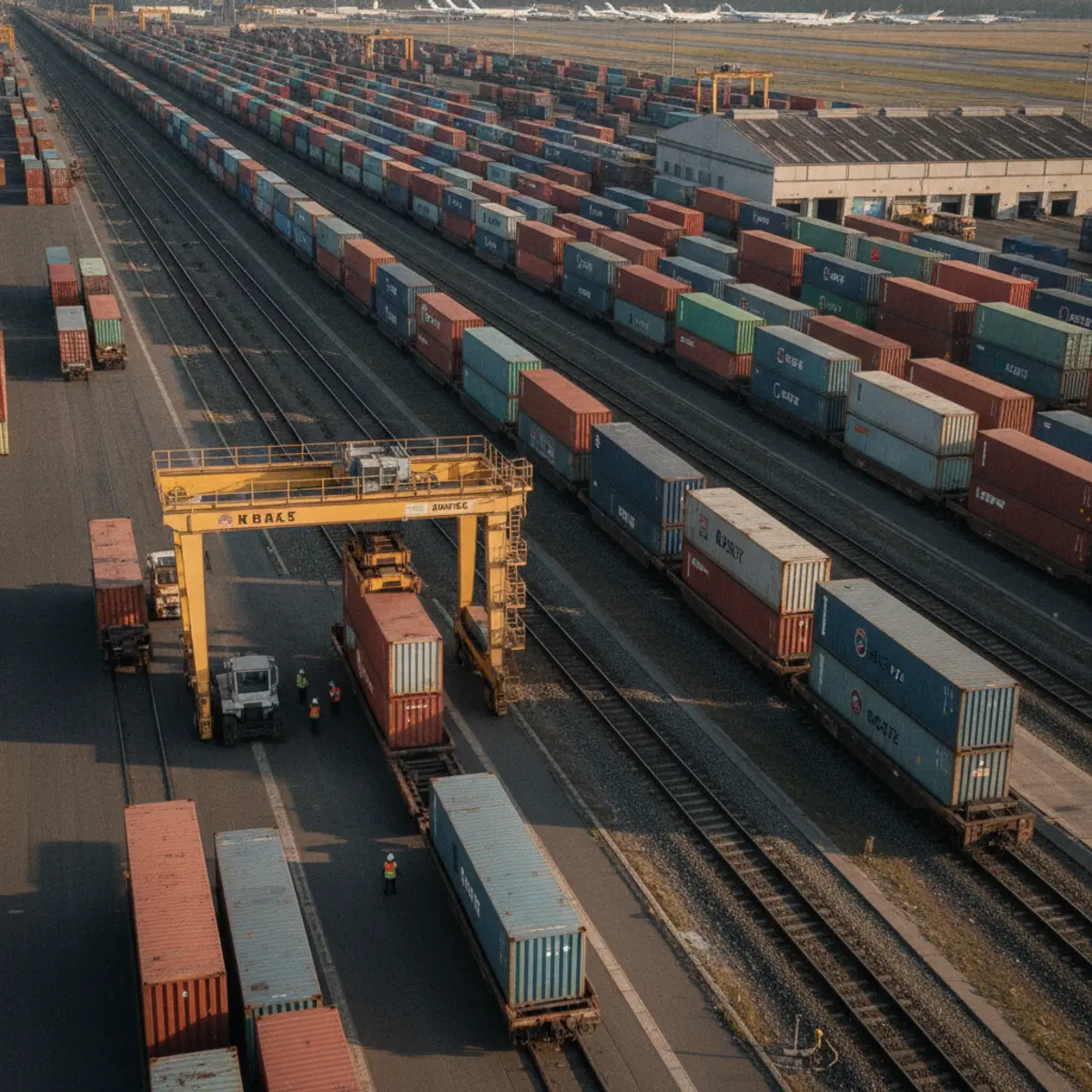
Rail freight on US railroads posted solid weekly gains, with intermodal traffic growing faster than overall volumes, FreightWaves reported on 12 August 2026. The publication said rail freight has stretched its lead over 2025, so cumulative traffic this year is running ahead of the same point last year rather than simply recovering lost ground. Intermodal covers containers and trailers carried on flatcars, which means the growth sits in the box traffic that moves manufactured and consumer goods. Because intermodal outpaced the overall figure, the non-intermodal carload segments grew more slowly than the network average.
Published: 12 August 2026 Source: FreightWaves
What Faster US Intermodal Growth Means for UK Shippers
UK exporters selling into the United States rarely stop at the quayside. A container discharged at New York, Savannah or Los Angeles usually reaches its final destination on a train, and the inland leg is where transit times actually move. When intermodal grows faster than the rest of the network, pressure shows first in equipment and terminal handling: chassis availability, ramp appointment slots and dwell at inland terminals such as Chicago. Ask at booking which inland ramp your container routes through, and whether the move is carrier haulage or merchant haulage, because that decides who chases a delay and who pays for it.
The FreightWaves figures cover US railroads only, and they are not a signal about UK or European rail conditions, which are set by different infrastructure, different operators and different border formalities. What does travel across is the underlying constraint: rail capacity flexes more slowly than road capacity, because paths, wagon sets and terminal slots are committed weeks ahead. Freight trains cannot be added at short notice in the way a haulier adds a vehicle. UK shippers using rail freight forwarding on the China to Europe corridor will recognise the same pattern, where departure slots and wagon availability, not distance, set the achievable transit.
Watch the weekly volume reporting rather than reacting to a single week. If intermodal keeps outpacing total traffic, the practical responses are to book the inland leg earlier, to widen the buffer between vessel arrival and promised delivery date, and to price in the risk of per diem and storage charges if a box sits at a ramp. Transloading at the port into domestic 53ft trailers is the usual alternative when inland rail tightens, though it adds a handling cost and a handling risk. Decide which of those you would accept before the shipment is on the water, not after.
Key Takeaway
US intermodal is growing faster than the rail network as a whole, according to FreightWaves. For UK exporters, that makes the inland leg the part of the journey most likely to slip, so the routing, ramp and haulage arrangement need confirming at booking rather than on arrival.
Market Impact on Transatlantic Trade
Sustained intermodal growth usually firms inland rail pricing and shortens the practical free time at destination ramps. Where an exporter has sold on delivered terms, that cost sits with the seller, and where the buyer controls main carriage under Incoterms 2020 FCA or FOB, it sits with the importer. Neither party benefits from discovering the split at invoice stage. This is a reason to state explicitly in the sales contract which party carries detention, demurrage and per diem exposure on the US inland leg.
For UK importers buying US-origin goods, the same congestion works in reverse. Machinery, food ingredients and consumer goods moving from US inland points to an export port travel by rail before they reach a vessel, and a delayed inland move usually pushes the consignment onto the next weekly sailing rather than costing a day. That single missed sailing is often the largest schedule variance in the whole journey. Confirm with the supplier who books the inland leg and how much time they have allowed before the vessel cut-off.
Source: https://www.freightwaves.com/news/rail-freight-stretches-lead-over-2025