




What Happened
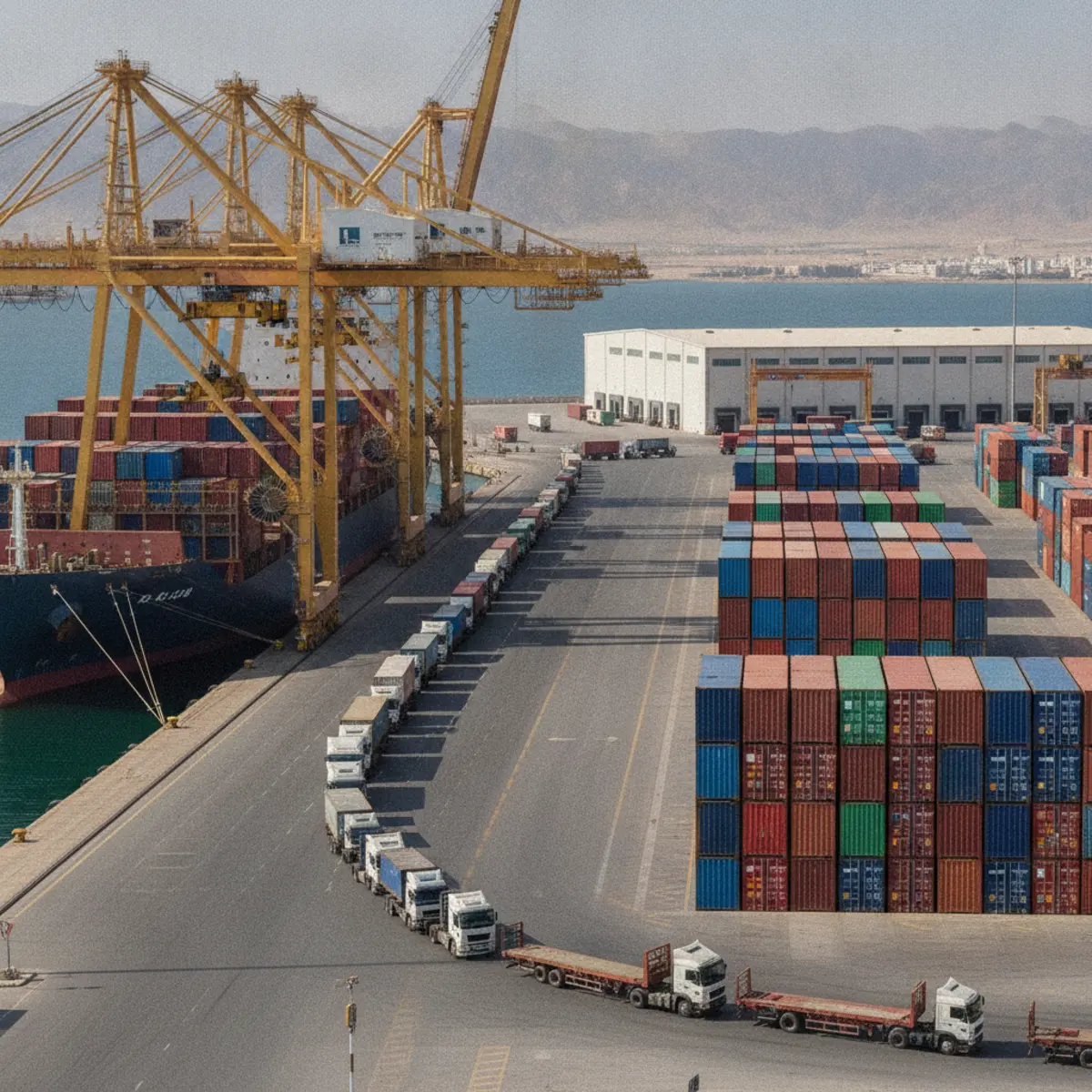
Aqaba Container Terminal in Jordan handled 472,680 TEU in the first half of 2026, up from 468,062 TEU in the same period of 2025, according to The Maritime Standard on 3 August 2026. The headline growth is modest, an increase of 4,618 TEU or just under 1%. The movement sits underneath it. Transit cargo volumes reached 60,178 TEU, which the terminal reports as a 155% increase. Transit boxes now account for roughly 13% of everything moving across the quay at Jordan’s only container port.
Published: Mon, 03 Aug 2026 00:36:35 +0000 Source: The Maritime Standard
Why Aqaba Volumes Matter to UK Trade
Aqaba is not a UK port call in the ordinary sense, but it is a routing option. Transit cargo is freight that lands at Aqaba and then moves overland to neighbouring markets rather than being consumed in Jordan, so a 155% rise points to cargo reaching the Levant and Iraq through Jordan instead of through other gateways. For a UK exporter shipping a single shipping container to that region, the practical question is which port pairing gives a firm delivery date, because the inland leg after discharge can add several days and a separate set of transit documentation.
The wider context is Red Sea routing. The Maritime Standard’s reported figures do not attribute a cause, so the driver should be treated as unconfirmed rather than established. What is visible is that terminals positioned as alternative entry points have been reporting transit growth while headline throughput stays flat, which is the shape Aqaba’s numbers show. UK shippers with Gulf and Levant customers have spent 2 years absorbing rerouting effects on both transit time and rate, and terminal-level data like this is one of the few public signals of where volume actually settled.
For shippers reviewing options now, the useful work is comparison rather than assumption. Ask for door-to-door transit times, not port-to-port, since the overland movement after Aqaba is where schedules slip. Confirm that certificates of origin and any preferential documentation match the routing, because transit through a third country can affect what the buyer’s customs authority accepts. Where a consignment is time-critical and the sea option adds a fortnight, air freight into regional hubs remains the fallback for high-value or production-critical parts.
Key Takeaway
Aqaba’s total throughput barely moved, but transit cargo rose 155% to 60,178 TEU. That mix shift matters more than the headline. UK exporters serving Iraq and the Levant now have a routing that is carrying real volume, and it deserves a like-for-like comparison on delivered cost and delivered date.
Market Impact
Growing transit volumes usually mean better service frequency, and frequency is what UK shippers feel. More calls at a terminal make LCL consolidation viable on lanes where it previously was not, which matters for exporters sending part loads rather than full boxes. It also spreads risk. When one corridor into a region gets congested or expensive, a second corridor carrying 60,178 TEU of transit cargo is a genuine alternative rather than a line on a carrier presentation.
The counterweight is inland capacity. Ports can absorb container growth faster than road networks and border posts can absorb truck movements, so rapid transit growth tends to move the bottleneck rather than remove it. Buyers quoting delivered terms should confirm who carries the cost of border delays and demurrage on the inland leg. Under Incoterms 2020 that allocation is explicit, and it is the clause most often left unexamined until a container sits at a crossing.
Source: https://www.themaritimestandard.com/transit-traffic-surge-gives-aqaba-container-terminal-a-boost/