



What Happened
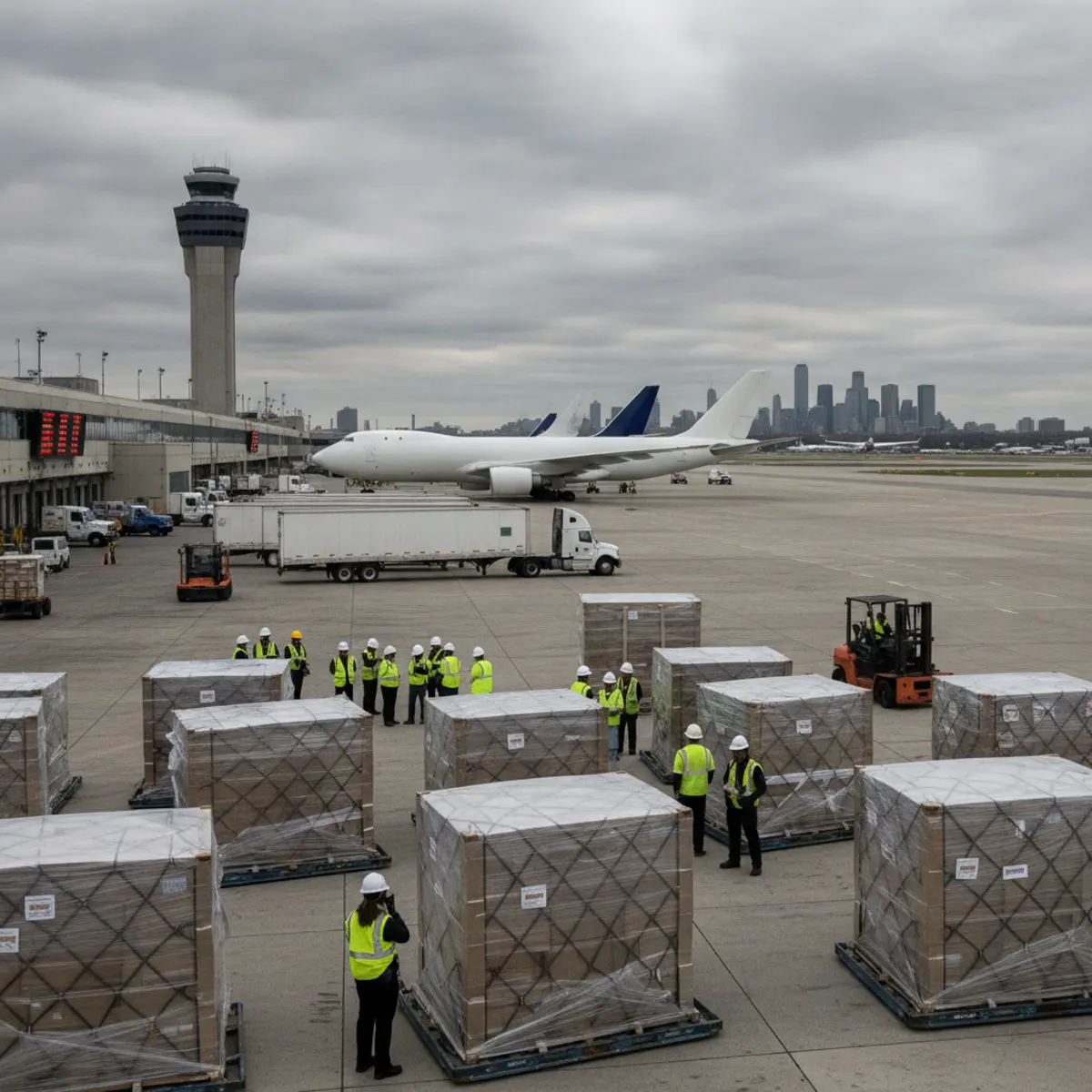
Ground stops at US airports on Monday of this week saw more than 7,000 flights delayed or cancelled, Air Cargo Week reported on 24 September 2026. The affected airports in the US Northeast included Philadelphia International, Newark Liberty International, John F. Kennedy International and LaGuardia. The Airforwarders Association has called on the Federal Aviation Administration to implement the recommendations set out in a United States Government Accountability Office report, which the association says would strengthen the air traffic control system. Air Cargo Week is the source for the airport list, the flight count and the association’s call.
What the Northeast Ground Stops Mean for UK Air Cargo
Three of the four named airports are primary transatlantic gateways, and most UK air cargo to the US Northeast travels in the belly of passenger aircraft rather than on freighters. When a ground stop halts departures at Newark and JFK, UK export consignments already tendered at Heathrow, Manchester and East Midlands do not simply fly a few hours late. They are offloaded and rolled to the next available service, and because the aircraft and crew are out of position, the backlog usually takes several days rather than one to clear. Anyone using air freight forwarding for time-critical parts needs that recovery period built into the promise given to the end customer.
The distinction worth drawing is between a weather closure at a single airport and a system-wide flow control measure. A snow event at JFK diverts traffic to Boston or Washington Dulles and clears with the weather. A ground stop driven by air traffic control capacity affects the whole Northeast corridor at once, which removes the alternate airports that normally absorb the overflow. That is why the Airforwarders Association has framed this as a structural issue for the FAA rather than a one-off operational incident, and why it is pointing at the GAO recommendations rather than at any individual airport.
For UK shippers the practical response is routing discipline rather than panic. Where a consignment is genuinely time-critical, splitting it across two carriers and two gateways costs more but removes single-point exposure. Where it is not, moving the booking to a service arriving 24 hours earlier than the customer needs gives a free buffer at no extra freight cost. Importers bringing goods the other way, out of the US Northeast into the UK, should also check whether their supplier’s stated handover date is a tender date or an actual uplift date, because the two diverge sharply during a backlog.
Key Takeaway for UK Shippers
Over 7,000 flights delayed or cancelled in a single day across four Northeast airports means transatlantic air cargo schedules in both directions are unreliable this week. Treat quoted transit times as indicative, build in a buffer of at least 48 hours, and confirm actual uplift rather than booking status.
Market Impact
Capacity is the pressure point. Rolled cargo competes with newly booked cargo for the same belly space once flying resumes, so rates on the Europe to US Northeast lane tend to firm for several days after a disruption of this size. Shippers with fixed allocations are protected; those buying on the spot market are not. Perishable and temperature-controlled consignments are hit hardest, because a 48 hour delay can consume the remaining shelf life or breach the temperature profile agreed with the receiver.
There is a knock-on for US customs and delivery scheduling as well. Entry filings are unaffected by a flight delay, but delivery appointments at consignee warehouses are, and a missed slot in a busy distribution centre can push delivery back by a further day or two on top of the flight delay itself. UK exporters should tell their US consignees early rather than waiting for the arrival scan, since rebooking a warehouse appointment takes longer than rebooking a flight.
Reported by the Plexus Freight team, from Air Cargo Week.
Source: https://aircargoweek.com/us-northeast-ground-stops-see-call-for-faa-action/