




What Happened
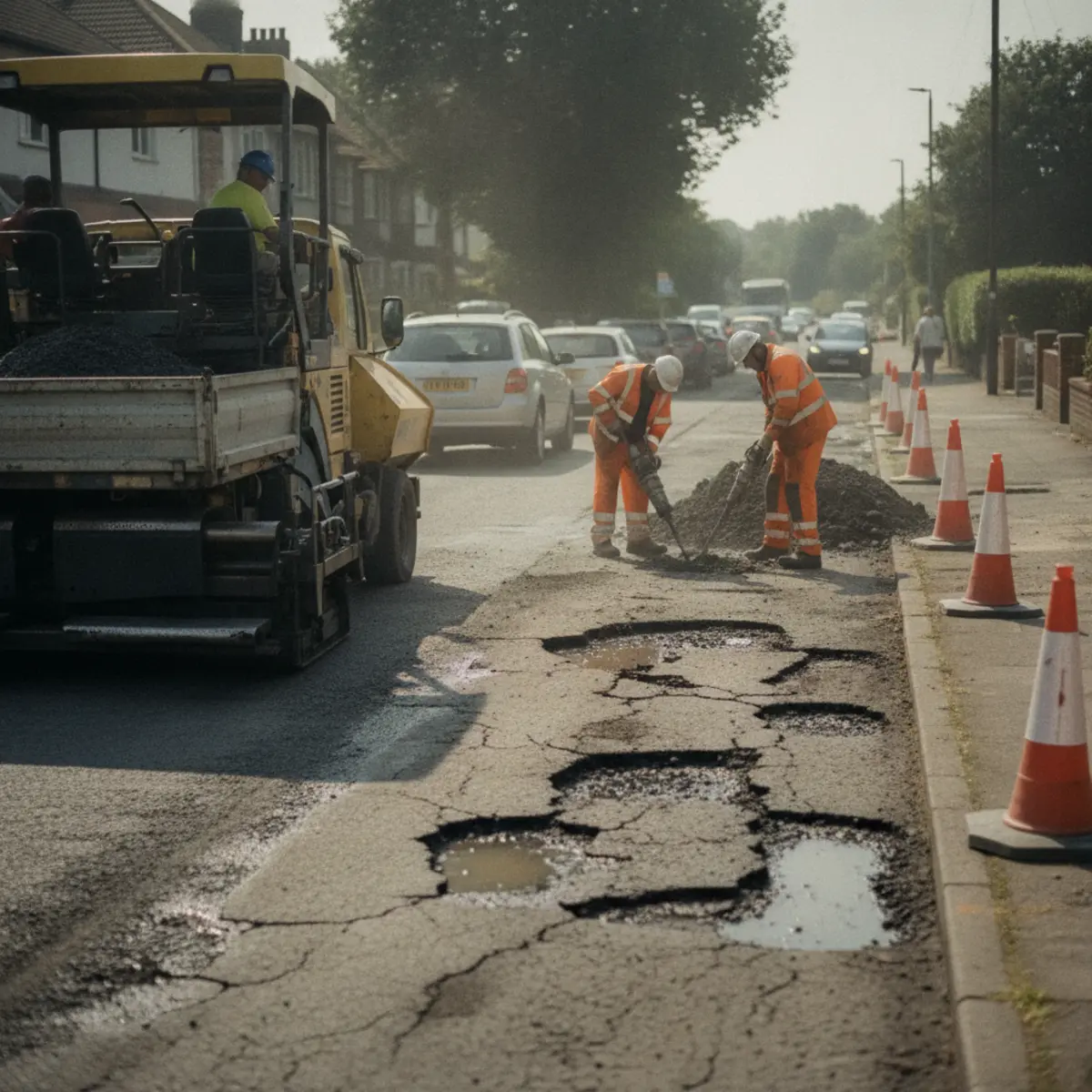
Drivers and hauliers should expect a jump in the number of potholes on UK roads following the country’s hottest summer on record, the RAC has warned. The Guardian reported the warning on 16 September. Potholes are commonly assumed to be a cold or wet weather problem, but long periods of heat also cause lasting damage to road surfaces, according to the RAC. Extreme weather makes brittle surfaces more likely to crack, increasing the strain on infrastructure the Guardian describes as already dilapidated. The record summer figure comes from provisional Met Office data.
What Deteriorating Road Surfaces Mean for European Groupage
Surface damage reaches freight as cost before it reaches it as delay. Tyre, suspension and trailer damage is carried by the operator, and it concentrates on local roads serving industrial estates rather than on motorway running. For groupage traffic, where one trailer makes several collections and deliveries in a day, the exposure sits in the first and last mile, where vehicles run slow, loaded and turning. Palletised and fragile goods feel it as well, which is why drivers recheck restraint at each drop rather than only at loading.
Heat driven cracking is not a UK phenomenon. Summer pavement buckling is a long running maintenance issue on the US road network, where surface temperatures force expansion in concrete and asphalt alike. What differs here is timing. Damage done by heat in July and August typically widens into a pothole once water enters the crack and freezes, so the cost of the 2026 summer will be counted through the winter rather than now. That places the peak risk in the same months as fourth quarter European groupage volumes.
For shippers, the response is scheduling rather than route avoidance. Surface repairs are generally carried out in dry conditions, so expect lane closures and temporary traffic lights on A road approaches to industrial areas through autumn. Road condition feeds into the road leg of our freight services, because almost every consignment starts or ends on a lorry, including sea and air shipments moving to and from Avonmouth, Heathrow and the Channel ports. Booking collections earlier in the day gives a trailer room to absorb an unplanned hold at roadworks without missing a ferry or Eurotunnel departure.
Key Takeaway
The warning is about condition, not closure. No route is shutting, but surface quality on the local roads that serve collection points is deteriorating, and the effect will show through the winter freeze thaw period. Build collection windows with slack in them rather than assuming a clean run to the trunk.
Market Impact
Deteriorating surfaces raise unplanned maintenance on tractor units and trailers, and unplanned maintenance removes vehicles from a collection plan at short notice. For a groupage operation running fixed departure days to European destinations, losing a trailer on the morning of a trunk to Dover or Purfleet is a scheduling problem before it is a repair bill. Consolidation makes that worse, because a single vehicle off the road affects every consignment loaded on it rather than one customer’s cargo.
There is no immediate rate movement to report, and none should be presented as expected. The slower effect is on operator cost bases, where tyre and suspension replacement intervals shorten and vehicle availability tightens. The US road network absorbs heat damage across far greater distances than the UK does, but the operational read is the same on both: surface condition is a transit time variable, not only a maintenance statistic. Shippers planning winter schedules should treat UK domestic legs with the same tolerance they already apply to Channel crossings.
Reported by the Plexus Freight team, from The Guardian Business.
Source: https://www.theguardian.com/uk-news/2026/sep/16/expect-more-potholes-uk-roads-summer-heatwaves-rac