




What Happened
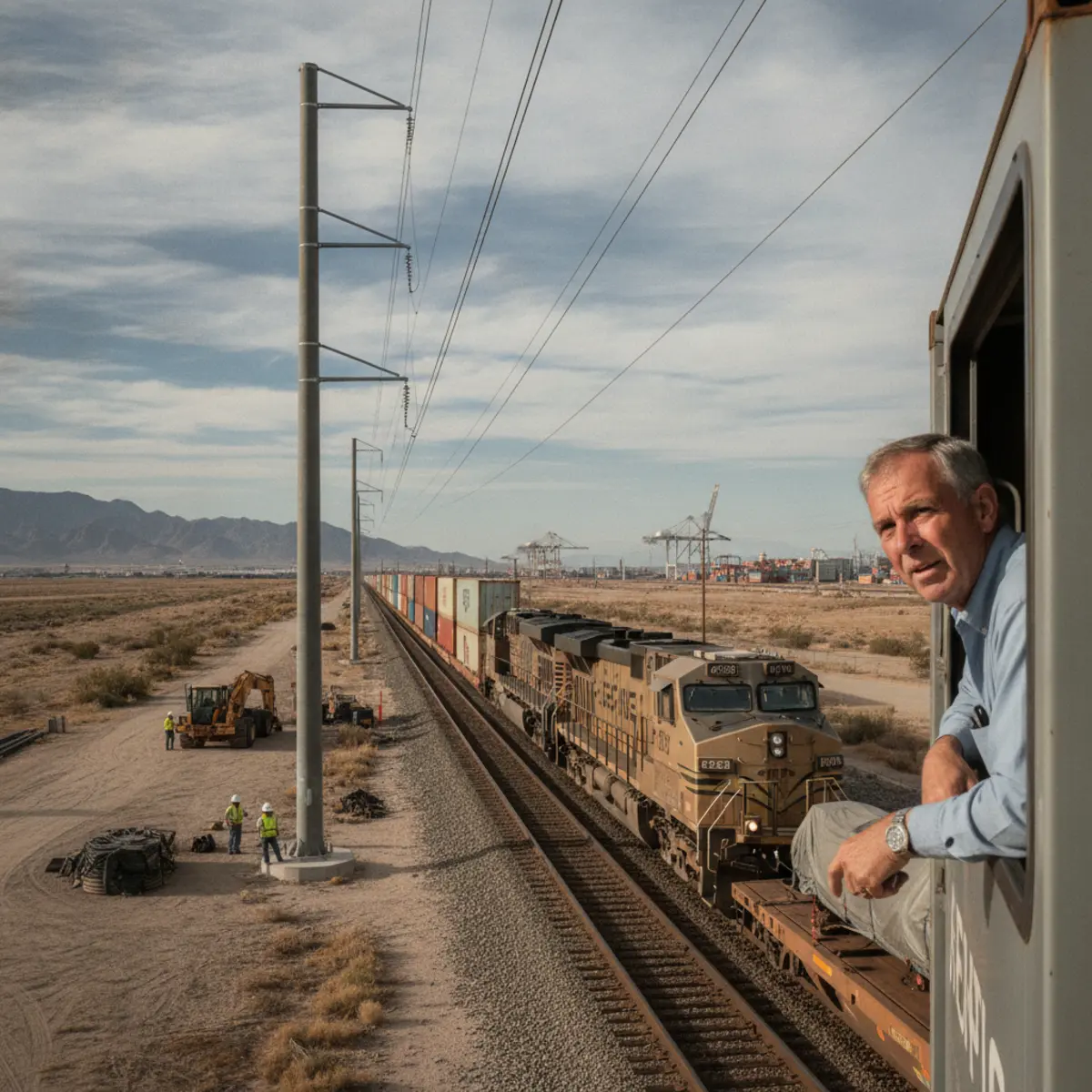
The US Department of Transportation wants to run high voltage power lines along the American freight rail network, The Loadstar reported on 15 September. The proposal covers the nearly 140,000 route miles of freight railroad in the United States, treating existing rail corridors as ready made routes for new transmission infrastructure. The Loadstar’s assessment is that the initiative offers railroads a fresh revenue stream and the country a faster grid buildout, but that nobody has yet asked what it means for the freight moving over those tracks. The report gave no construction timetable and named no corridors.
Why US Rail Corridor Works Matter to UK Importers and Exporters
Nothing changes on US inland moves today, because the DOT has set out an intention rather than a build programme. The exposure sits further out. UK exporters selling into the American midwest, and importers pulling goods from inland US suppliers, depend on intermodal rail from the coastal ports to interchanges such as Chicago, and that rail leg is where transit variability already concentrates. Construction alongside live track needs access to the track, and on single track sections that access comes from the same windows freight paths use.
Monetising a linear corridor is not a new idea. Railways across Europe have carried telecoms fibre along their formations for decades, and the same logic, one owner, one continuous right of way, one set of consents, is what makes rail attractive to grid planners. The UK precedent runs in the other direction and is instructive: Network Rail electrification programmes have repeatedly required engineering possessions, and freight operators have replanned paths around them. Anyone quoting rail freight forwarding on a long inland leg prices that risk in, whether the wires overhead carry traction current or grid power.
Watch the detail rather than the announcement. Three questions decide whether this reaches your cargo: whether transmission work is scheduled into existing maintenance possessions or into additional ones, whether the Surface Transportation Board takes a view on capacity, and which corridors are named first. Until a route list exists, the practical step is to check how inland transit is contracted. A door delivery sold under Incoterms 2020 DAP leaves inland delay risk with the seller, and a port to door transit range on a rate sheet is an estimate, not a commitment.
Key Takeaway
The plan is at proposal stage and changes nothing for cargo this week. The exposure for UK shippers is the US inland rail leg, where any programme of works alongside live track competes for the same possessions freight paths depend on. Treat inland transit as a range rather than a fixed number of days.
Market Impact
For the railroads, transmission leases represent income that does not move with carloadings, which matters in a market where intermodal volumes track the trade cycle. That income is earned by giving something up, namely space alongside the track and time on it. If the revenue is attractive enough, the incentive to accept longer or more frequent possessions rises. The cost of that reaches shippers as slower and less predictable inland transit rather than as a visible line on an invoice.
For UK importers and exporters, the near term effect is on planning rather than on price. Transatlantic sea freight into US east coast ports followed by rail inland trades speed against cost compared with air, and the trade only works while the rail leg stays predictable. Shippers holding fixed delivery windows into US distribution centres should confirm inland transit at the point of booking and revisit it once the DOT names its first corridors. A quoted port to door transit means little without knowing which rail segment carries it.
Reported by the Plexus Freight team, from The Loadstar.
Source: https://theloadstar.com/the-dot-wants-to-string-power-lines-along-your-freight-railroad/