




What Happened
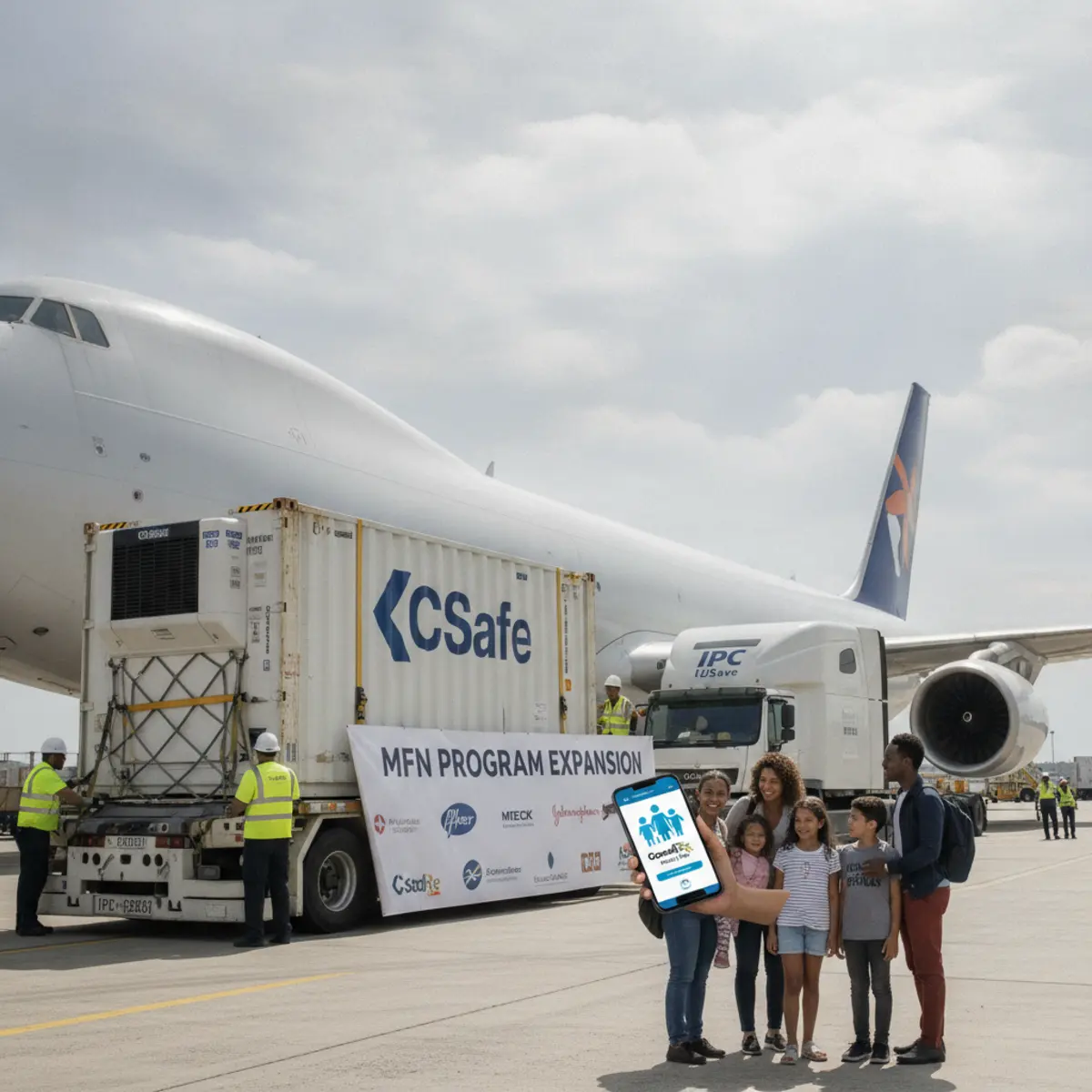
CSafe has expanded its thermal cover offerings with a reusable option, Pharmaceutical Commerce reported in its Pharma Pulse round-up on 4 September 2026. The same round-up reports that nine more drugmakers have joined the MFN programme, that GoodRx has added a family plan, and that IPC has formalised its USave partnership. Pharmaceutical Commerce groups these as separate items rather than linking them. The thermal cover item carries the most direct freight consequence, because covers are the passive temperature protection wrapped around pallets of pharmaceuticals in the aircraft hold.
Why Reusable Covers Change the Customs Question
Switching a thermal cover from single-use to reusable turns a one-way shipment into a round trip, and that is a customs matter as much as a packaging one. A single-use cover leaves the UK inside the value of the consignment and never comes back. A reusable cover has to be returned to the shipper or to a pooling depot, which means an export entry on the empty leg, a commodity code for the cover itself, and a decision about which relief applies when it comes back. Getting that wrong means paying duty and import VAT on the same asset repeatedly.
The wider trend is cost pressure meeting waste pressure. Pharmaceutical Commerce reports both the MFN expansion and the CSafe cover in the same round-up without connecting them, but the connection is real for shippers: price ceilings on medicines push manufacturers to look at every line below the gross margin, and packaging that is thrown away after one flight is an obvious target. Reusable passive covers sit between single-use blankets and active containers, offering repeat use without the charging, servicing and lease overhead that active units carry on every lane.
UK importers running temperature-controlled pharmaceutical lanes should map the return leg before adopting reusable covers, and check how pharma freight services handle the empty movement, storage and re-export. Returned Goods Relief can remove duty and import VAT on items re-imported to the UK in an unaltered state within 3 years, provided you can evidence the original export, so keep the export MRN against each cover pool. Temporary Admission may suit covers owned overseas. Decide the treatment first, not after the first empty arrives.
The Operational Test
Reusable packaging only saves money if the return leg is planned, priced and cleared properly. Count the empty movement, the storage between uses and the customs treatment on re-import as part of the unit cost, and compare that total against the single-use price rather than comparing the covers alone.
Market Impact on Cold Chain Freight
Passive protection is where most UK pharmaceutical air freight actually sits. Active containers get the attention, but the majority of temperature-controlled pallets travel under blankets and covers with a validated performance window, typically holding 2C to 8C or 15C to 25C for a stated number of hours. A reusable option changes the economics of that middle tier, and buyers should ask for the validated duration and the qualification data rather than accepting a general claim, because the number of hours determines whether a routing with a transhipment stop is viable at all.
The second effect is on the return network. Reusable equipment only works where there is somewhere to send it back to, which favours lanes with established pooling depots and penalises thin routes. UK shippers running to secondary destinations may find the empty leg costs more than the saving on the cover. Ask the packaging supplier where the nearest collection point sits, and price the return before committing a lane to reusable equipment.
Reported by the Plexus Freight team, from Pharmaceutical Commerce.