



What Happened
Lloyd’s Register has launched LR RouteFlex, an application designed to give containership operators more flexibility in stowage planning, Container News reported on 3 September. The tool uses metocean data, meaning combined meteorological and oceanographic inputs, to calculate weather dependent factors for individual routes. Operators can then adjust stowage plans when voyage conditions or the route itself change, rather than working to a single plan fixed before departure. Lloyd’s Register is a classification society. Container News did not report pricing, launch customers or which operators are trialling the application.
Published: Thu, 03 Sep 2026 21:30:30 +0000 Source: Container News
What Stowage Planning Changes at the UK End
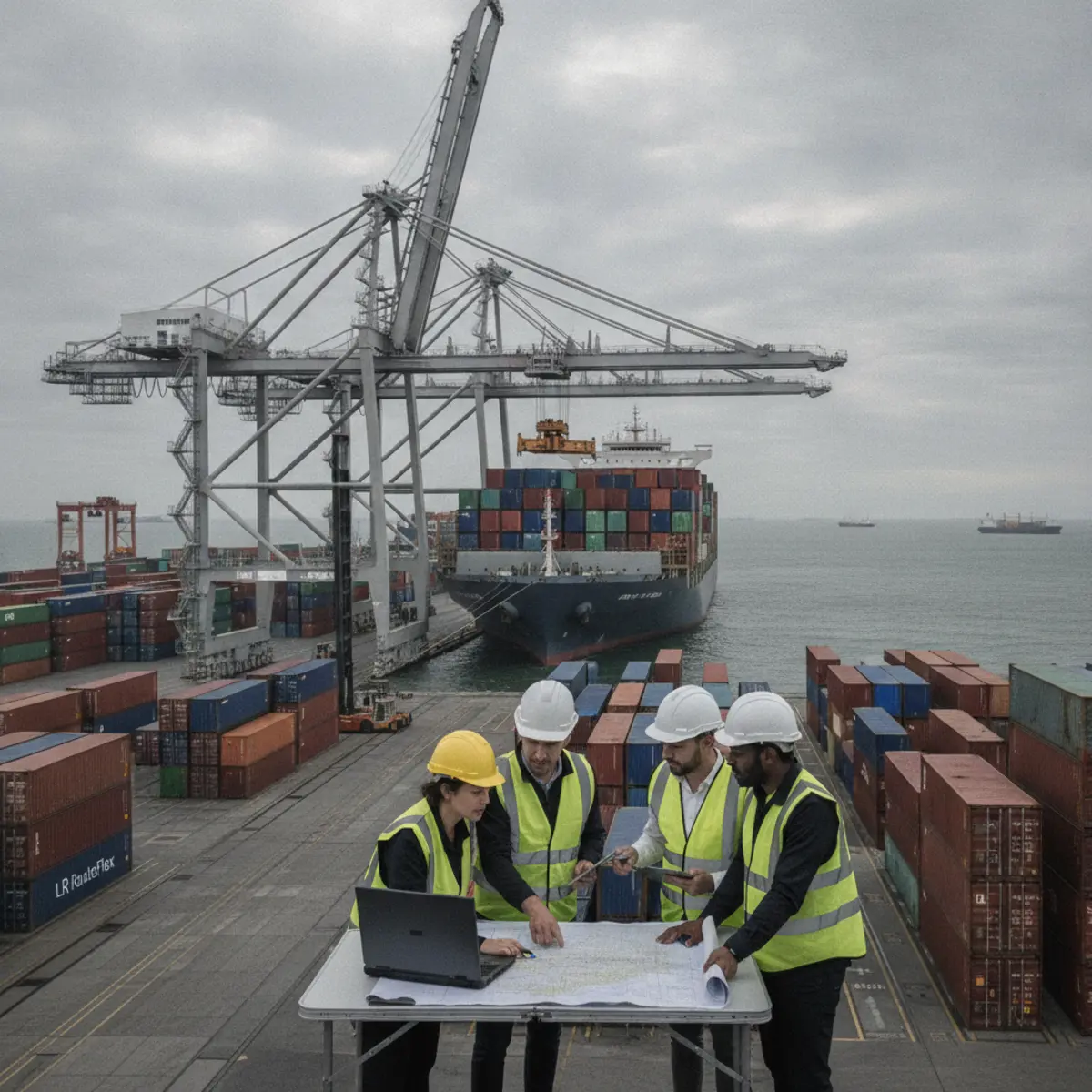
Stowage decides where your box sits on the vessel, and the consequences land at the UK end. A shipping container placed low in the stack discharges later than one on deck, which moves the hour your haulier can collect from Felixstowe, Southampton or London Gateway. Weight distribution governs whether a heavy unit is accepted on a given sailing at all. Out-of-gauge cargo needs specific slots, and temperature-controlled boxes need reefer plugs, so both are placed early in the plan and are awkward to move later.
The launch reflects how much less predictable a container voyage has become. When a loop is rerouted, the weather the ship meets changes with it, and a stowage plan built for one ocean is not automatically right for another. Heavy rolling loads the lashings and the boxes themselves, and cargo damage claims and containers lost overboard both trace back to how a ship was loaded and how it was driven. Classification societies write the lashing and securing rules, so voyage specific stowage advice is an extension of that role.
For shippers the useful work sits upstream of the vessel. Accurate weight declarations under the SOLAS verified gross mass rule feed straight into the stowage plan, and an understated weight can put a box in the wrong slot. Dangerous goods declarations, out-of-gauge dimensions and temperature settings need to reach the carrier before the documentation cut-off, not after it. When booking shipping container services, give the exact commodity, gross weight and any handling constraint at the point of booking rather than at the terminal gate.
Key Takeaway on Declarations
Stowage is not a shipper facing process, yet it sets discharge order, cargo condition and whether a shipping container makes its intended sailing. The levers you control are an accurate verified gross mass, early declaration of anything unusual and a booking that describes the cargo as it actually is.
Market Impact
There is no immediate rate or schedule effect from this launch. The likely impact shows up in cargo claims over a longer period, because weather adjusted stowage should mean fewer collapsed stacks, less container damage and fewer general average situations following heavy weather. Cargo insurers price that claims history. UK importers with repeat claims on a particular trade may find the underwriting conversation shifts if the carriers they use adopt route specific stowage planning as standard practice.
What to watch is adoption. A class society application only matters to cargo owners once operators run it on the loops that serve UK ports, and Container News did not say which carriers are using it. In the meantime the operational discipline is unchanged: declare weights correctly, book special equipment early and expect the discharge sequence at a UK terminal to depend on decisions taken at the load port. Ask your carrier where restow costs land if a plan changes mid voyage.
Source: https://container-news.com/lloyds-register-launches-routeflex-for-container-stowage-optimisation/