




What Happened
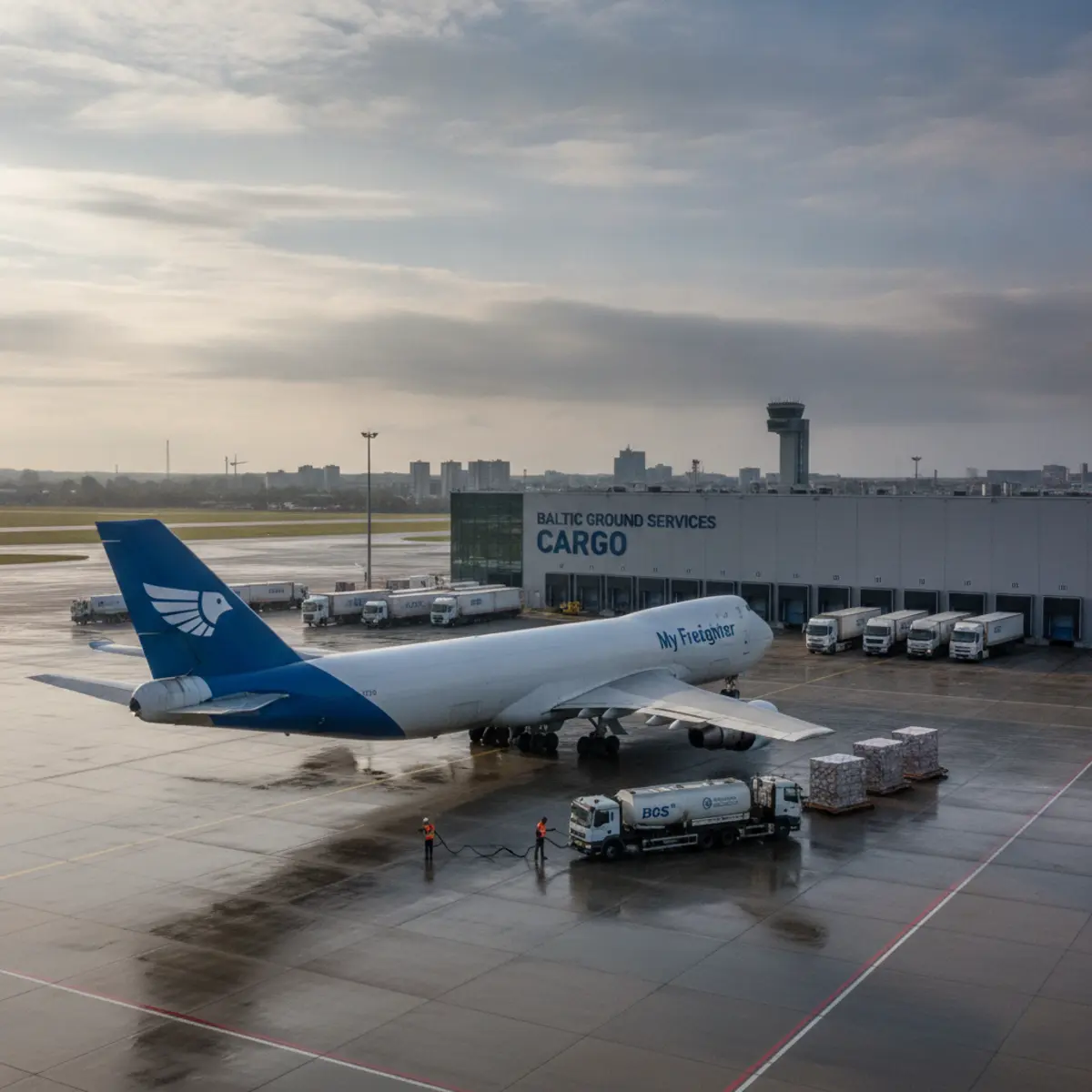
My Freighter has expanded its partnership with Baltic Ground Services to cover fuel supply and ground handling at Ostrava, Tallinn and Riga airports, Air Cargo Week reported on 26 August. The agreement extends an existing arrangement between the 2 companies across 3 airports in the Baltics and Central Europe. Air Cargo Week reports that the expanded network is expected to improve service reliability and efficiency, and to support the airline’s continued European growth. The report does not state the contract length, the volumes involved or the date the expanded arrangement takes effect.
Published: Wed, 26 Aug 2026 Source: Air Cargo Week
What Ground Handling Agreements Change for Shippers
Handling and fuelling decide how quickly a freighter turns, and turnaround decides whether a schedule holds. At secondary airports the handling market is thin, so a single agreement can determine whether an aircraft is worked in hours or waits for a slot. For UK importers pulling components or finished goods out of Riga, Tallinn or Ostrava, the practical read is capacity stability on those lanes rather than a change in price. Reliability at the ramp is what protects a promised delivery date at the far end.
This sits inside a wider pattern of carriers locking in ground services at second tier airports instead of relying on congested primary hubs. Riga and Tallinn serve Baltic manufacturing and distribution, while Ostrava sits in an industrial region of the Czech Republic. Cargo from those catchments often reaches the UK by road groupage, with air freight forwarding reserved for urgent replacement parts and short shelf life goods. Where an airline commits to consistent handling, air cargo becomes a more dependable exception route rather than an ad hoc one.
Before quoting against any of these 3 airports, confirm who holds the ramp and the terminal, because the handler sets acceptance cut-offs, screening arrangements and collection hours. Ask whether the cargo terminal operates at weekends, since a Friday arrival with a Monday release removes the whole benefit of flying. On the UK side, goods arriving from the EU still need an import declaration on CDS with the correct commodity code, and importers registered for postponed VAT accounting should confirm the entry is completed on that basis rather than paying import VAT at the border.
Key Takeaway
Fuel and handling agreements rarely make headlines, but they are the layer that keeps a freighter schedule honest. If you move urgent air cargo through Riga, Tallinn or Ostrava, ask your carrier who now handles the aircraft and what the acceptance cut-off is at each terminal.
Market Impact for UK Importers and Exporters
The direct commercial effect on UK rates is likely to be small, because this is an airline securing its own operating support rather than an addition of capacity. The indirect effect is schedule integrity on Baltic and Central European routes, which matters most for time-critical movements where a 24 hour handling delay cancels the reason for flying. Air Cargo Week frames the expected gains as reliability and efficiency, and presents them as an expectation rather than a measured outcome, so treat them accordingly.
For UK buyers with Baltic suppliers, the sensible response is to review which mode each product line actually needs. Road groupage from the Baltics remains the volume option, and air is the exception for line stoppages and short shelf life goods. A more stable handling arrangement makes the exception route easier to plan, but it does not change customs obligations, transit distance or the need to book against a published cut-off.