



What Happened
Aircraft on Ground events have become a growing structural challenge for airlines, Air Cargo Week reported on 17 August 2026. It attributes the trend to ageing fleets, supply chain disruption and expanding aircraft numbers, and says rapid parts delivery is now essential to maintaining schedules, network stability and customer commitments. The publication also reports that airlines increasingly treat AOG logistics as a risk management and certainty driven service rather than a transport function. No carrier is named in the section published, and no volume or cost figures are given.
Published: Mon, 17 Aug 2026 00:15:22 +0000 Source: Air Cargo Week
What Certainty Driven AOG Movement Means for UK Shippers
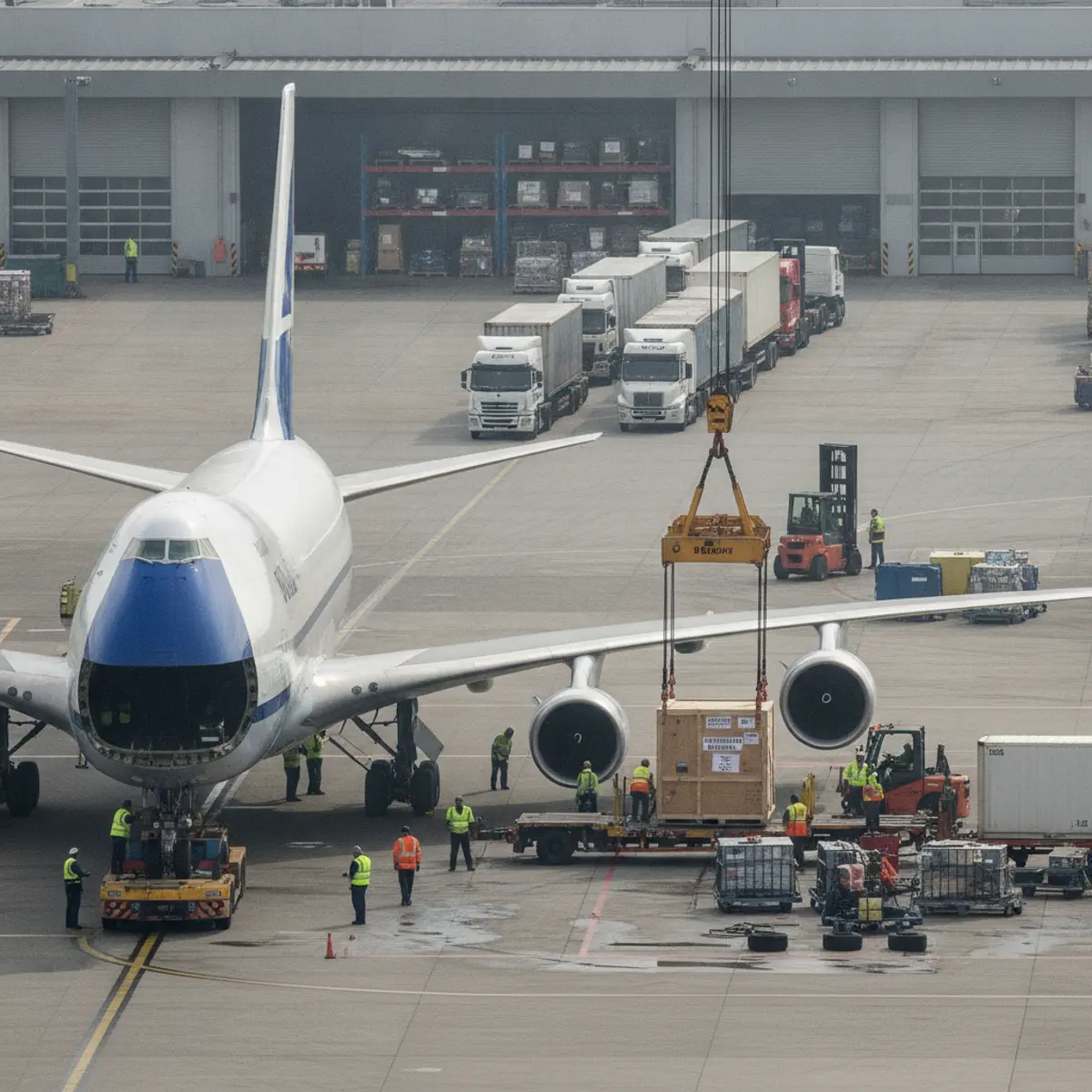
The buying criterion changes with this framing. If certainty carries the same weight as speed, the quoted transit time stops being the deciding number and the committed one takes over: a named flight, a confirmed cut-off at the shed, a customs entry lodged before the goods arrive. UK aerospace exporters and repair stations tendering urgent spares should ask for the flight number and the acceptance deadline in writing, and should know whether the consignment travels as loose pieces or is built onto pallets for a main deck position.
The same pressure sits behind any time critical freight services booking, whether the cargo is an aircraft part, a production line spare or a medical device. Air Cargo Week points to ageing fleets and expanding aircraft numbers as structural causes, which means AOG demand competes for the same priority capacity, handling slots and road legs that other urgent consignments need. When space is short, the shipment with a confirmed booking and a clean customs entry moves and the one waiting on a commodity code does not.
Preparation is where UK shippers can buy certainty cheaply. Keep the commodity code, EORI number and Incoterms 2020 term settled before the call comes, because an incomplete CDS entry can hold cargo at the shed long after the aircraft has landed. Check weights and dimensions against the pallets and unit load devices the airline will use, since an oversized build can lose a booked position. Track the MRN through clearance, then confirm the road leg from the airport, which is often the part that slips.
Key Takeaway for Urgent Shipments
Certainty is being priced alongside speed in AOG movements, according to Air Cargo Week. For UK shippers the practical translation is simple: a committed flight, a confirmed acceptance time and a customs entry that clears first time are worth more than an optimistic transit quote.
Market Impact for UK Aerospace and Urgent Freight
Demand for guaranteed movements tends to sit at the top of the priority queue, which affects everyone else booking urgent air cargo. Air Cargo Week frames AOG work as risk management, and risk management buys space early. UK exporters moving spares, samples or line-stopping components should expect firm bookings to carry a premium and should build the acceptance deadline, not the flight time, into promises made to customers. That is a scheduling change more than a cost one.
The knock-on effect lands on the ground, not in the air. Parts that arrive on a night flight still need handling, a customs entry cleared on CDS and a vehicle booked for the onward leg, and pallets waiting for any one of those steps are as delayed as cargo that never flew. For UK importers and exporters the useful measure is door-to-door certainty across the whole chain, counted in hours against a fixed acceptance time rather than in flight sectors.
Source: https://aircargoweek.com/why-certainty-matters-as-much-as-speed-in-aircraft-recovery/